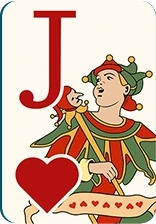
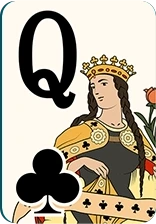
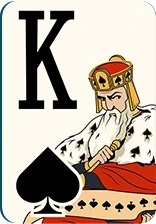
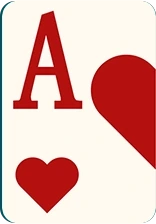
Tiến Lên — “go forward” — is the Vietnamese climbing game, played here by the Southern rules,
Tiến Lên Miền Nam. Every hand is shuffled and dealt on the server, and every hand’s coins are
checked to add up before they move.
Coins are play money. They have no cash value and can never be cashed out.
Features
The Southern rules, Tiến Lên Miền Nam — 2 to 4 players, 13 cards each
Singles, pairs, triples, straights, four of a kind and runs of pairs
Bombs cut 2s, and a cut pays out on the spot
Four instant wins on the deal — four 2s, a dragon, three triples in a row, six pairs
Cards shuffled and dealt by the server, and every hand settled to the coin
How to play
Shed all 13 cards before anyone else. Each play must beat the last one with the same kind of play, higher — or you pass.
The table and the deal
Two to four players and one 52-card deck, no jokers. Everyone is dealt 13 cards. At a table of two or three, the cards left over are set aside for the hand.
The goal
Get rid of every card in your hand. Play goes on after the first player is out, so every seat finishes in a place. The hand ends when only one player still holds cards, and that player comes last.
Card order
Rank comes first, and suit only breaks a tie between two cards of the same rank. The 3♠ is the lowest card in the deck and the 2♥ the highest.
Rank
3
4
5
6
7
8
9
10
J
Q
K
A
2
3 is low 2 is high
Suit, when ranks tie
3 ♠
3 ♣
3 ♦
3 ♥
♠ low ♥ high
What you can play
A single card.
A pair: two cards of the same rank.
A triple: three cards of the same rank.
Four of a kind.
A straight: three or more ranks in a row, like 7-8-9, in any mix of suits. There is no length limit.
A run of pairs: three or more pairs in a row, like 55-66-77.
A 2 can never be part of a straight or a run of pairs, and a run cannot turn the corner from A to 2 to 3. Two pairs in a row, and triples in a row, are not plays.
Who leads
In the first hand, whoever holds the 3♠ leads, and the lead must include it. At a table of two or three where nobody was dealt the 3♠, the lowest card dealt takes its place.
From the second hand on, the winner of the last hand leads, with any play they like.
If last hand’s winner is not dealt in, the first-hand rule applies again.
Your turn
Play goes counter-clockwise. On your turn, beat the cards on the table or pass.
Once you pass, you sit out until the table is cleared, even if the next play is one you could beat.
When everyone else has passed, the last player to play clears the table and leads anything they like.
What beats what
Beat a play with the same kind of play, the same number of cards, and a higher top card. A pair beats a lower pair; a five-card straight beats a lower five-card straight. The only exception is the bomb — four of a kind, or a run of three or more pairs — which can cut 2s:
2♠ A single 2 is cut by four of a kind, or by exactly three pairs in a row.
2♣2♥ A pair of 2s is cut by four or more pairs in a row.
2♠2♣2♦ Three 2s is cut by five or more pairs in a row.
A bomb on the table is beaten only by the same kind of bomb, the same length, higher — four of a kind does not beat a run of pairs. Nothing beats four 2s.
Instant wins
Some deals win before a card is played. If you are dealt one of these, you win the hand at once:
Four 2s.
A dragon: one card of every rank from 3 to A.
Three triples in a row. A 2 never follows an A, so KKK AAA 222 does not count. Four of a kind can stand in for one of the triples, so 333 444 5555 does.
Six pairs: any 12 of your 13 cards make six pairs. Four of a kind counts as two pairs, and pairs of 2s count.
If two players are dealt an instant win, the stronger one takes the hand: four 2s, then a dragon, then three triples in a row, then six pairs. Two of the same: the higher top card wins.
How coins move
Players settle in pairs by finishing place: first collects from last, and second collects from third. Each pair moves 1× the table stake. With three players, the middle seat breaks even.
Last place also pays first place for what is stuck in their hand: 1×, 2×, 3× or 4× the stake for each 2♠, 2♣, 2♦ or 2♥, and 5× the stake for each bomb they never played. A card counts toward one bomb only.
Cutting a 2 pays on the spot: the player whose 2 was cut pays the cutter that 2’s value, from 1× for a 2♠ to 4× for a 2♥. When a pair or three 2s is cut, only the lowest 2 is paid.
An instant win is paid 2× the stake by every other player, with nothing added.
A 3% table fee is taken from winning hands: 3% of what each player who comes out ahead nets in the hand. A player who pays in a hand pays no fee.
To take a seat you need 20× the stake — the most one hand can cost. You only ever pay what you actually lose.
Time and leaving
You have 20 seconds a turn. A private table can be set to 10, 15, 20 or 30 seconds.
If time runs out you pass, or, if you were leading, a play is made for you. Miss two turns in a row and auto-play takes your seat; tap to stay, or you leave the table when the hand ends.
Leaving or losing connection mid-hand does not take you out of it. Your seat plays on and settles like any other, and you can rejoin until the hand ends.